Fashion design careers — what the work really looks like
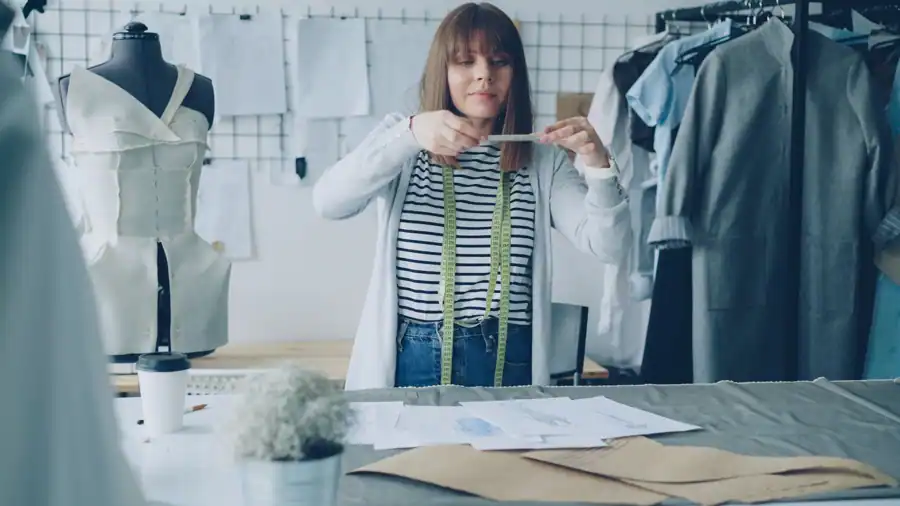
Careers in fashion design are not one job. They are a cluster of roles, assistant designer, technical designer, product developer, textile designer, production coordinator, and most of them spend more time on spreadsheets and fittings than on sketching. This guide shows what each role actually does, what it pays, and how people get in.
The main roles in fashion design
Design is the smallest part of the design department. For every person sketching a collection, several others are measuring samples, chasing fabric deliveries and updating tech packs. That ratio is the single most useful thing to understand before you pick a direction.
Current openings on fashion job boards show the spread clearly: a New York listing board might carry a Designer for men's sportswear, a Senior Technical Designer, an Assistant Designer for kids, an Apparel Product Developer and a Textile Designer in the same week, plus a Production & Logistics Coordinator and an Inventory & Logistics Manager in Lakewood. Same industry, wildly different days.
| Role | What decides your day | Typical entry path | Where the jobs cluster |
|---|---|---|---|
| Assistant Designer | Supporting a senior designer's calendar | Design degree + internship | New York, Los Angeles |
| Technical Designer | Fit sessions and measurement specs | Patternmaking or production background | New York, New Jersey |
| Product Developer | Sample deadlines and factory communication | Production or sourcing assistant | New York, Lakewood |
| Textile Designer | Print and surface development | Textile or fine art degree | Costa Mesa, New York |
| Production Coordinator | Purchase orders and delivery dates | Logistics or admin role | New York, regional hubs |
Notice that only one row is about drawing. The rest are about making the drawing real, and those roles are often easier to enter.
What a design day actually looks like
A designer's week runs on a calendar set by sales, not by inspiration. Seasons are planned months ahead: concept, fabric selection, first samples, fit corrections, then production handoff. Miss a fit date and the whole delivery slips.
Here is the part nobody tells students. A designer at a mid-size brand may sketch for two hours and spend the rest of the day in a fit session, on a call with a factory, or fixing a tech pack because a seam allowance was wrong. The creative work is real, but it is sandwiched between logistics.
If that sounds unappealing, the technical and product development tracks pay comparably and hire more steadily. If it sounds fine, you will last longer than most.
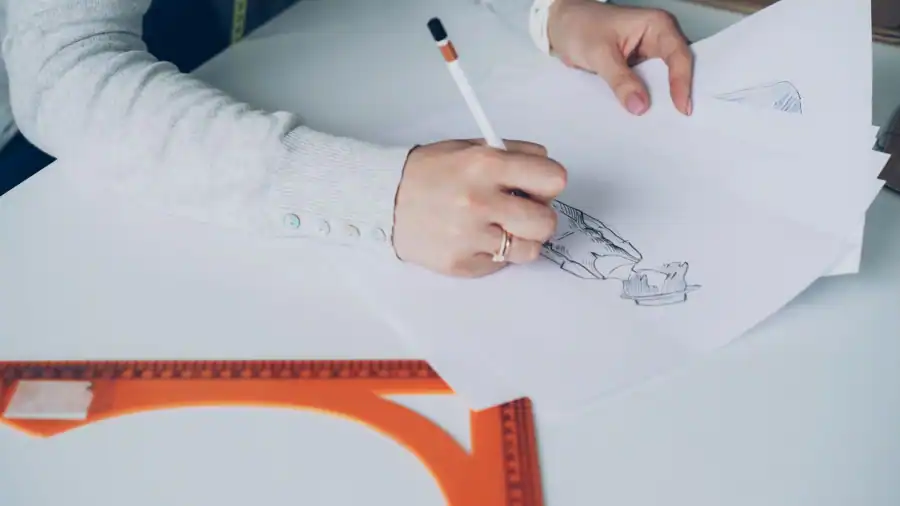
Photo: Vitaly Gariev · Pexels
What fashion design careers pay
Fashion salaries are lower than tech and finance at the same experience level, and the spread inside a single title is wide. Pay depends on category, city and whether the employer is a large brand or a small label.
As a rough structure rather than a promise: assistant and coordinator roles sit at the bottom of the range, mid-level designers and technical designers in the middle, and senior product development or design leadership at the top. New York and California pay more than most other markets, but rent takes a large share of it back.
Two things move your number faster than loyalty: switching category (swimwear, activewear and kids have different demand cycles) and moving into a role that owns a budget, like product development management or sourcing.
Skills that get you hired
Hiring managers screen for software fluency first, because it is the fastest way to filter a stack of applications. Then they look for evidence you understand construction, not just silhouette.
- CAD and PLM tools, Adobe Illustrator for flats, plus whichever product lifecycle system the brand runs.
- Patternmaking and fit, reading a spec sheet and knowing why a garment pulls at the armhole.
- Fabric knowledge, how a knit behaves after three washes, what a fabric costs per yard.
- Excel, cost sheets, sample tracking, delivery calendars. This is not optional.
- Communication under deadline, factories, vendors and sales teams all want answers the same day.
Portfolio advice from people who hire in this industry tends to repeat one point: show process, not just finished renders. Flats, fabric calls and fit corrections prove you can do the job.
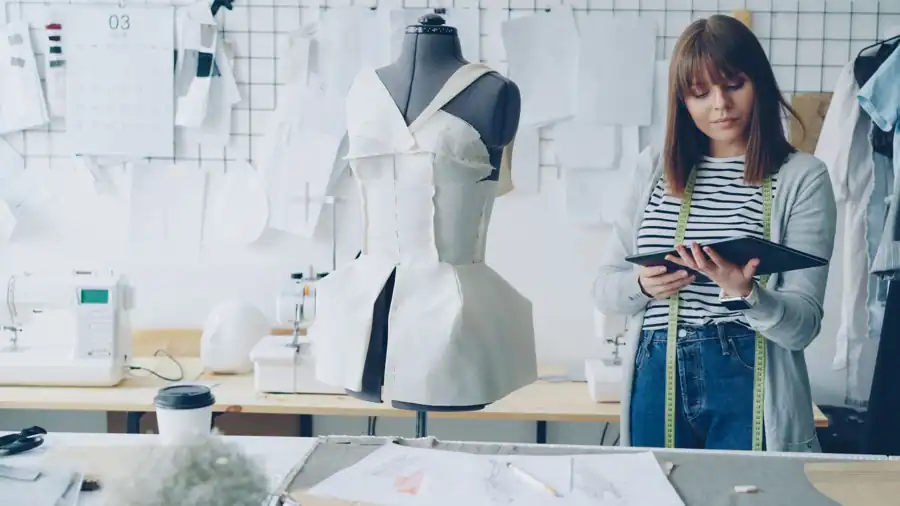
Photo: Vitaly Gariev · Pexels
Getting your first job
The first job is the hardest one, and it usually comes through a person rather than a portal. Referrals, alumni networks and internship supervisors account for a large share of entry-level hires.
Practical sequence that works:
- Pick one category, swimwear, kids, activewear, denim, and build a portfolio aimed only at it.
- Apply to assistant, technical and product development roles at the same time. They are different doors into the same building.
- Set up job alerts so you are among the first applicants rather than the last; early applications get read.
- Follow up once, briefly, a week after applying. Then move on.
One caveat: unpaid internships are common in this field but not universal, and the ones that pay tend to be at larger brands. Weigh that before accepting.
Internships and the New York pipeline
New York remains the densest market for fashion design careers in the US, and internships are how most people enter it. A summer at a brand teaches you the calendar, the software and the vocabulary, and gives you a reference who will answer an email two years later.
For a sense of how varied the work inside one company can be, see this behind-the-scenes look at an email marketing manager in fashion, and this conversation with Derek Lam and Jenna Lyons on how designers build a career. If you are still deciding whether the industry is for you, this piece on building your own path is worth ten minutes.
Apply early, apply widely, and treat the first role as a two-year apprenticeship rather than a destination.
FAQ
What careers are in fashion design?
Beyond designer, the field includes technical designer, product developer, textile designer, patternmaker, production coordinator and sourcing or logistics manager. Most of these roles exist at every brand size, and several hire more often than design roles do.
Is fashion design a good career?
It is a good career if you want to make physical products and can tolerate deadline pressure and modest early pay. It is a poor fit if you expect the job to be mostly sketching, or if you need high starting compensation.
What are the highest-paid fashion jobs?
Pay rises with budget ownership. Senior product development, sourcing and design leadership typically out-earn creative roles at the same seniority, and category matters, activewear and swimwear have strong demand cycles.
What is the easiest fashion career to get into?
Production coordination, product development assistance and inventory or logistics roles have the lowest barriers, because they reward organization over portfolio. They also give you a view of the whole business, which helps if you later move toward design.
Do you need a degree to work in fashion design?
Not always. Technical, production and logistics roles often hire on demonstrated skill instead. Design roles at larger brands usually expect a related degree plus internships, so the answer depends on which door you take.
The short version
Careers in fashion and design reward people who like both the idea and the admin. Pick a category, learn the software and the fit process, and apply to more than one type of role, the technical and development tracks are where the steady hiring is. Start with an internship if you can get one, and treat your first two years as training.
More on the site
Read next
Fashion marketing internships — where to look and what to send
Fashion marketing internships are posted year-round, but the strongest programs hire on a calendar: summer roles open in late fall, spring roles in Oc…

Fashion internships New York: how to land one
Fashion internships in New York are not won by the most talented designer in the room. They go to the person who applied first, wrote a clean email, a…

Fashion industry internships: how to land one
Most fashion internships are filled before they are ever posted. The listing you see on a job board is often the last step of a process that started w…