Published 1 October 2026
Most fashion design internships are never posted publicly. They get filled through a short email, a professor's introduction, or a portfolio someone saw on Instagram. So the search is really two jobs at once: finding the openings that exist, and sending a package that makes a designer stop scrolling. This guide covers both, where to look, what to send, and how to avoid the mistakes that quietly kill an application.
01Where fashion design internships actually get posted
Start with the places that filter for real design work, not general "fashion" listings. The big job boards are useful, but they are crowded, a single posting at a known label can pull hundreds of applications in a week. Your odds improve when you go where the applicant pool is smaller.
Four channels do most of the work:
- Brand career pages. Large houses post internship cycles on their own sites, often under "Careers" or "Students." Check monthly, cycles open and close fast.
- School career offices. If you are enrolled, this is your unfair advantage. Employers come to them specifically to hire, and the listings are not public.
- Direct outreach. Smaller labels rarely post anything. A short, specific email to a studio manager or head of design works better than waiting.
- Industry events and open studios. A conversation at a show or a studio open house turns into an internship more often than people admit.
If you want a sense of how people actually land roles behind the scenes, the stories on this site's blog are a good starting point, they tend to focus on the path rather than the title.
The channel you choose shapes what you send. A brand portal wants a clean PDF; a small studio wants to see that you looked at their last collection.
A ten-person studio and a global label will ask for completely different things, and applying to both with the same package is the most common mistake. Match your materials to the size of the team.
| Studio type | What matters most | Typical tasks | How to apply |
|---|---|---|---|
| Small label (under 15 people) | Versatility, attitude | Cutting, samples, errands, fittings | Direct email with 3-5 images |
| Mid-size brand (15-100) | Technical skill | Tech packs, fabric sourcing, spec sheets | Career page plus a follow-up email |
| Large house (100+) | Formal training, references | Department-specific support | Structured portal, fixed cycles |
| Bridal or couture atelier | Hand-sewing precision | Beading, finishing, hand work | Portfolio review, often in person |
| Costume or film wardrobe | Speed, improvisation | Fittings, continuity, alterations | Referral or union contacts |
Notice the second column. That is the attribute that decides whether you get a reply, not the brand name on your résumé. Read it before you write a single line of your cover note.
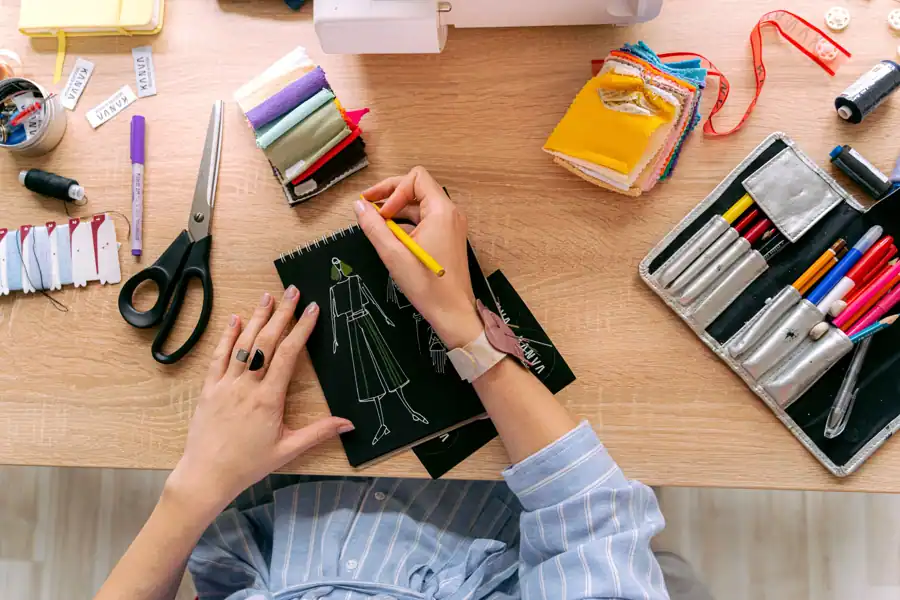
Photo: Antoni Shkraba · Pexels
02What to put in your portfolio
Ten strong pieces beat thirty average ones, every time. Reviewers spend a few minutes per portfolio at most, and they are looking for evidence you can do the job, not a survey of everything you have ever made.
A workable structure for a design internship portfolio:
- Three to five finished projects with a clear point of view, sketch, fabric choice, final garment.
- Process shots. Draping, pattern pieces, toiles. This is what separates design applicants from mood-board collectors.
- Technical work. One or two tech packs or spec sheets if you have them.
- One page of range. A single spread showing breadth, print, knit, tailoring, without padding.
- Contact details on the last page. Obvious, and forgotten constantly.
Keep the file under about 10 MB and name it clearly, something like lastname-firstname-portfolio.pdf. If you work digitally, a simple site works too, but make sure it loads in under three seconds on a phone.
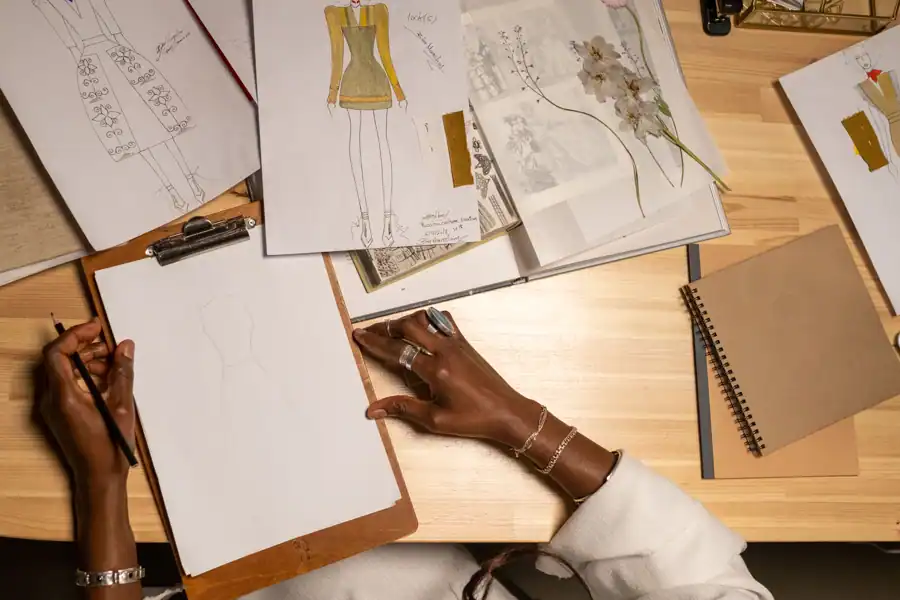
Process pages, sketches, toiles, swatches, carry more weight than finished photos alone.
03The email that gets opened
Your subject line is doing more work than your portfolio. A studio manager scanning an inbox decides in about two seconds whether to open, and "Internship Application" tells them nothing.
Try a subject that names the role and the value: Design intern, [your name], tailoring and draping portfolio. It reads like a person, not a form submission.
The body should be short. Four or five sentences:
- Who you are and what you are studying or making right now.
- One specific reason you are writing to this studio, reference a collection, a technique, a detail.
- What you can actually do: sewing, draping, CAD, Illustrator, hand finishing.
- Your availability, in weeks and dates.
- One link. Not three.
Attach the PDF, link the site, and stop. Long emails read as uncertainty, and uncertainty is the one thing a busy studio cannot afford.
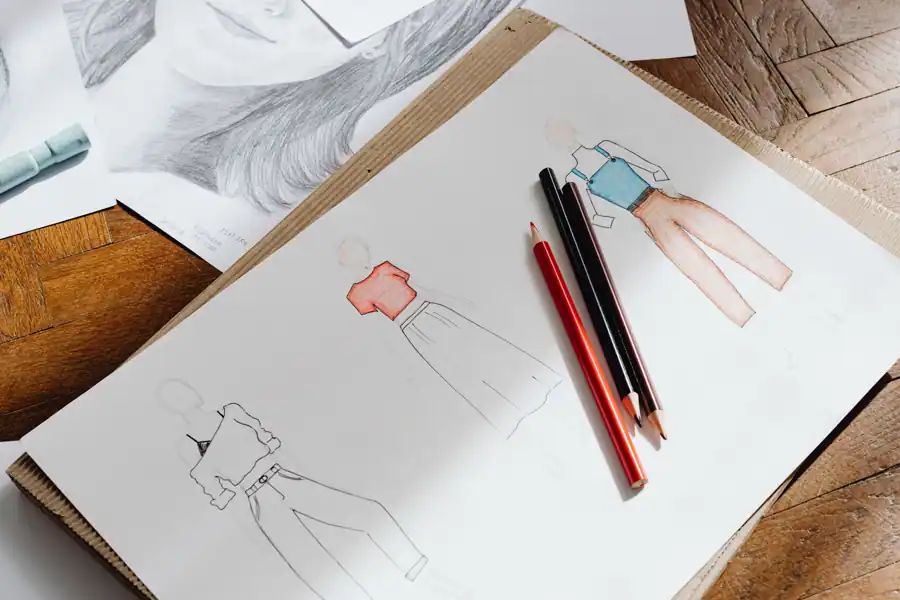
Photo: https://kaboompics.com/ · Pexels
04Timing: when to apply
Fashion runs on a calendar that has nothing to do with the academic one. Most design internships line up with the production cycle, which means the hiring conversation starts months before the start date.
For a summer placement, that usually means sending materials in late winter. For a fall slot, aim for late spring. If you are applying off-cycle, the same rule applies, reach out a few months ahead rather than the week you need the role.
Miss the window and you are not rejected; you are simply invisible.
05Mistakes and what they cost you
Most rejections come down to a handful of avoidable errors. Here is what they are, and what each one actually costs.
- Generic cover letter. The reviewer can tell you sent the same text to twenty studios. Cost: instant delete.
- Portfolio over 20 MB. It bounces or takes too long to open. Cost: your work never gets seen.
- No process work. Finished photos alone read as a styling project, not design. Cost: you get sorted into the wrong pile.
- Vague availability. "Flexible" means nothing to a studio planning a production run. Cost: they move to the next candidate.
- No follow-up. One polite nudge two weeks later is normal and expected. Cost: your email sinks under newer ones.
- Ignoring the studio's actual work. Applying to a knitwear label with an all-tailoring book. Cost: mismatch, no reply.
None of these require more talent. They require attention, which is why they are worth fixing first.
If you are still building your direction, pieces like Believe You Can Paint Your Own Future! are worth a read before you start writing emails.
06Questions people ask
Do I need a degree to get a fashion design internship?
Not always, but it helps. Larger houses often require enrollment or recent graduation because their programs are structured around school partnerships. Smaller studios care more about your portfolio and whether you can sew. If you are self-taught, lead with finished work and technical skill.
Are fashion design internships paid?
It varies widely by country, company size and whether the role is tied to academic credit. Large brands and established labels are more likely to pay or offer a stipend; small studios sometimes offer credit, samples or expenses only. Ask about compensation and hours in writing before you accept, and check your local rules, in some places unpaid internships at for-profit companies are restricted.
How many studios should I contact?
Think in terms of a pipeline, not a single application. Twenty to thirty well-researched contacts over a few months is a reasonable target, with each message tailored to the studio. Ten generic emails will outperform nothing, but not by much.
What if I have no professional experience?
Use school projects, personal work and any making you have done, alterations, commissions, market stalls. Show the process behind each piece. Reviewers are hiring for potential and reliability as much as for a finished portfolio.
Should I apply if the posting says "no openings"?
Yes, briefly. A short, specific note that says you admire the work and would like to be considered for future openings is normal practice. Keep it to a few lines, attach one link, and do not follow up more than once.
07What to do this week
Pick ten studios you genuinely want to work with, and check what each one actually makes. Trim your portfolio to five projects with process pages, export it under 10 MB, and write one tailored email. Send it, note the date, and follow up once in two weeks. That single loop, repeated, is how most fashion design internships get filled.
08More on the site
Read next

Fashion jobs New York city: what the work really looks like
Fashion jobs in New York City mostly are not design jobs. Thousands of the openings in the metro area sit on retail floors, in showrooms, warehouses…
Fashion careers in LA: what the work really looks like
Fashion careers in LA are less about runway shows and more about showrooms, spreadsheets and shipping deadlines. The city's industry runs on…

Fashion industry careers: what the work really looks like
Careers in the fashion industry split into two worlds: the creative side that ends up on a runway, and the business side that decides what gets made…