01Where fashion internships are actually posted
Start with the brand's own careers page, not a job board. Large houses, LVMH, Kering, PVH, Tapestry, run structured programs with fixed intake windows, and those listings appear on their corporate sites weeks before they reach aggregators. Smaller labels rarely post at all.
For the mid-size and independent segment, three channels do most of the work:
- Trade boards: Business of Fashion careers, WWD classifieds, and FashionUnited carry roles that never hit general job sites.
- University career portals: FIT, Parsons, and LIM students see listings that stay closed to the public. If you're not enrolled, ask a friend to forward the digest.
- Direct outreach: A short, specific email to a studio's production or design coordinator. This is where most real openings come from.
One warning before you go further: the difference between a useful internship and an unpaid errand service usually comes down to one document. We'll get to it below.
The desk setup of a typical applicant: portfolio, swatches, and one tailored resume.
02Fashion industry internships in NYC
New York concentrates more fashion internships than any other US city, and the competition reflects it. The Garment District, SoHo, and the Brooklyn design clusters around Bushwick and Greenpoint hold most of the roles, from sample-room assistant to social media coordinator.
What separates NYC applicants is proximity and proof. Studios want someone who can show up to a 9 a.m. fitting without a two-hour commute, and who has already made something, a lookbook, a small collection, a styling shoot for a friend's brand. A finished project beats a perfect GPA almost every time.
| Internship type | Typical duration | Weekly hours | Pay range (USD) | Where it's posted |
|---|---|---|---|---|
| Design studio assistant | 10-12 weeks | 15-20 | $16-$22/hr | Brand careers page |
| PR and showroom | 8-12 weeks | 20-25 | $16-$20/hr | Trade boards |
| E-commerce and marketing | 12 weeks | 20-30 | $18-$28/hr | University portals |
| Production and sourcing | 10-16 weeks | 20-25 | $17-$24/hr | Direct outreach |
| Editorial (magazine) | 8-16 weeks | 15-20 | Often unpaid or stipend | Masthead emails |
Note the last row. Editorial placements still run on academic credit more often than cash, and that gap shapes which applications are worth your time.
Photo: Thirdman · Pexels
03What to send: portfolio, resume, and cover letter
Send three things: a one-page resume, a portfolio link, and a cover letter under 200 words. Anything longer gets skimmed, and skimming is where you lose.
Your portfolio should lead with your strongest finished piece, not your most recent one. Studios care about range and follow-through, so show three to five projects with a one-line caption explaining your role in each. If you worked on a team, say exactly what you did, pattern cutting, sourcing, styling, retouching.
The cover letter is where most applicants waste their only chance. Skip the paragraph about your lifelong passion for fashion. Instead, name one specific thing the brand did in the last six months and connect it to something you've made. Two sentences. That's the whole pitch.
 объясняет
04Timing: when to apply for each season
Fashion runs on a calendar that is roughly six months ahead of the weather. Summer internships are decided in January and February. Fall placements close in June. Spring roles get filled by October of the previous year.
If you apply in May for a summer spot, you are not early or late, you are invisible. The shortlist already exists.
Set a reminder for the first week of January and the first week of June. Those two windows cover most of the year's openings, and applying inside them roughly doubles your odds of a reply.
Photo: Ron Lach · Pexels
05Paid vs. unpaid: what to check before you accept
Unpaid internships in fashion are legal only in narrow circumstances, and the rules differ by state. In New York, an unpaid placement generally must be tied to academic credit and must not displace paid employees.
Before you say yes, confirm four things in writing:
- Whether the role carries academic credit or a stipend
- Who your direct supervisor is and how often you'll meet
- What you'll actually produce, a deliverable, not just "support"
- Whether travel and materials are reimbursed
If a studio can't answer those four questions, that silence is your answer.
06Common application mistakes and what they cost you
Most rejections trace back to a handful of avoidable errors. Each one has a price.
- Generic cover letter: reads as a mass send, gets deleted in seconds.
- Portfolio with no captions: the reviewer can't tell what you made, so they assume you made nothing.
- Applying outside the window: your file lands after the shortlist is set and never gets opened.
- No follow-up: a single polite email after two weeks often revives a stalled application.
- Ignoring smaller labels: you skip the studios where you'd actually touch the work.
Fix the first two and you're already ahead of most of the pile. The third one is a scheduling problem, not a talent problem, and it's the easiest to solve.
FAQ
How do you get an internship in fashion with no experience?
Build something first. A small self-directed project, a five-piece capsule, a styling shoot, a sourcing spreadsheet, gives you a portfolio entry and a talking point. Then apply to smaller labels where the bar for prior experience is lower.
What fashion companies offer internships?
Large groups like LVMH, Kering, PVH, and Tapestry run formal programs. Mid-size labels, showrooms, PR agencies, and editorial titles hire on a rolling basis, often without a public listing.
Is a 3.4 GPA good enough for a fashion internship?
Yes. Most fashion internships weigh portfolio and relevant experience far above grades, and many don't ask for a transcript at all. A strong project log beats a higher GPA.
Is 27 too old for an internship?
No. Career changers and graduate students intern regularly, and studios value the reliability. Frame your prior work as an asset rather than apologizing for it.
Do fashion internships pay in New York?
Many do, typically in the $16-$28 per hour range depending on the role. Editorial placements are the most likely to be credit-only, so confirm the terms before accepting.
07What to do this week
Pick three brands you actually wear or admire, find the name of one person in design, production, or marketing, and send a 150-word note with a portfolio link. Do that for two weeks straight and you'll have more real conversations than a hundred job-board applications.
The window for summer roles opens in January. Start building the portfolio now, so the only thing left to do in January is hit send.
08More on the site
Read next
Fashion jobs New York city: what the work really looks like
Fashion jobs in New York City mostly are not design jobs. Thousands of the openings in the metro area sit on retail floors, in showrooms, warehouses…
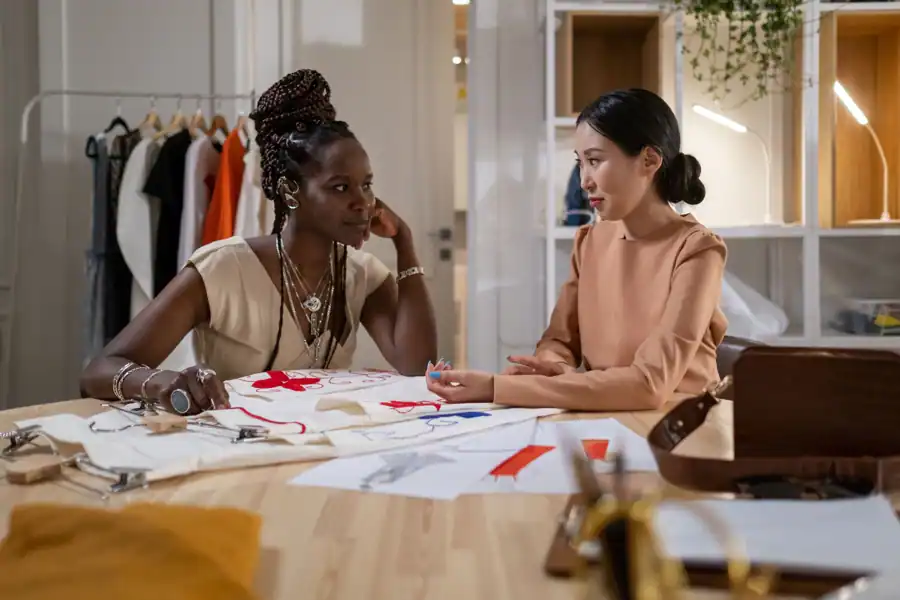
Fashion design internships: where to look and what to send
Most fashion design internships are never posted publicly. They get filled through a short email, a professor's introduction, or a portfolio someone…
Fashion careers in LA: what the work really looks like
Fashion careers in LA are less about runway shows and more about showrooms, spreadsheets and shipping deadlines. The city's industry runs on…